Les cheveux sains sont généralement plus épais et ont un aspect plus brillant. Les cheveux sont généralement en bonne santé s’ils peuvent pousser, s’ils tombent moins et s’ils ont une couleur saine.
Pour avoir des cheveux sains, les gènes jouent un rôle essentiel. Les gènes peuvent déterminer la quantité de sébum produite par votre cuir chevelu ainsi que le nombre de cheveux actifs que vous avez sur la tête. Le type de shampooing que vous utilisez affecte également la santé de vos cheveux. L’utilisation de shampooings contenant des produits chimiques agressifs peut endommager la cuticule, ce qui entraînera des cheveux secs et crépus qui se cassent facilement.
Sommaire de l'article
Conseil n°1 : Adoptez une alimentation équilibrée
Une alimentation saine est importante pour des cheveux sains. Un régime alimentaire déficient en nutriments essentiels peut entraîner des carences nutritionnelles dans le corps.
Une alimentation équilibrée comprend la bonne quantité de protéines, de graisses, de glucides, de légumes, de fruits et d’autres micronutriments. Il devrait inclure toutes les vitamines et minéraux essentiels dont votre corps a besoin pour fonctionner correctement.
Conclusion : Une alimentation équilibrée qui répond à tous les besoins de votre corps vous aidera à avoir des cheveux plus sains.
Conseil n°2 : Buvez beaucoup d’eau
C’est une idée fausse commune que de boire suffisamment d’eau est une question de choisir de boire ou de ne pas boire. En réalité, la quantité d’eau que vous consommez quotidiennement est un facteur important dans la gestion du poids, une peau saine et de nombreux autres aspects de votre santé.
Combien d’eau devriez-vous boire? La règle générale est que les gens ont besoin d’environ 2 litres d’eau par jour. Bien sûr, les niveaux d’activité, les conditions météorologiques et d’autres facteurs peuvent affecter la quantité dont vous avez besoin. Pour savoir combien de liquide vous consommez chaque jour, suivez cette calculatrice pratique
Conseil n°3 : Cheveux abîmés par l’eau chaude : rincez vos cheveux à l’eau froide.
L’une des raisons à cela est que la chaleur élevée peut assécher vos cheveux et vos follicules pileux. Cela conduit à la casse des cheveux. Cela rend également vos mèches plus sujettes aux pointes fourchues, qui sont les principaux responsables des frisottis.
Si vous voulez que vos cheveux restent beaux, assurez-vous de les rincer à l’eau froide lorsque vous sortez de la douche.
Conseil n°4 : Ne pas trop frotter ses cheveux avec une serviette
L’une des choses les plus importantes à éviter lorsque vous séchez vos cheveux est de trop les frotter avec une serviette. Frotter les cheveux avec une serviette cassera la cuticule de vos cheveux et peut les laisser crépus ou secs.
Conseils n°5 : Traitements, masques et gommages pour votre cuir chevelu
Envie d’avoir les cheveux frisées ? La taninoplastie est une nouvelle méthode.
Les masques et les gommages sont des produits qui peuvent être utilisés pour résoudre tout problème de cuir chevelu, de la sécheresse à la chute des cheveux.
Un masque est une application d’un produit sur le cuir chevelu ou les cheveux dans le but de le traiter ou de le renforcer. Un gommage, c’est quand le produit est frotté sur le cuir chevelu afin de l’exfolier.
Les masques et les gommages sont tous deux bénéfiques pour vos cheveux car ils nettoient, hydratent, adoucissent et reconstituent les nutriments de la peau.
Il existe trois types de gommages différents : à base d’huile, à base d’eau et à base d’argile.
Les gommages à base d’huile sont des produits très résistants qui éliminent les huiles de votre peau en pénétrant profondément dans les pores. Ils peuvent également être utilisés comme traitement revitalisant en profondeur pour les cheveux secs ou abîmés
Conseils n°6 : Brossez vos cheveux avant de les shampouiner
Le meilleur moment pour prendre une douche est lorsque vos cheveux sont sales. Mais avant de commencer ce processus, assurez-vous de vous brosser les cheveux. Cela vous aidera à éliminer les nœuds ou les nœuds qui pourraient se former pendant le shampooing.
Il existe de nombreuses raisons pour lesquelles se brosser les cheveux avant le shampooing vous sera bénéfique. Premièrement, cela aidera à prévenir la formation de nœuds et d’enchevêtrements. Deuxièmement, s’il y a des gouttelettes d’eau sur votre tête, elles peuvent être enlevées car les poils de la brosse les absorberont.
Conseils n°7 : protéger ses cheveux du soleil
Les rayons UV peuvent avoir un effet néfaste sur les cheveux, il est donc important de protéger vos cheveux du soleil. Le cuir chevelu n’a jamais été le même que la peau des autres parties du corps, qui peuvent être protégées par un écran solaire.
Si vous savez que vous allez dehors pendant longtemps, utilisez un chapeau ou un autre vêtement de protection pour protéger votre tête. Vous pouvez également utiliser un parapluie si vous ne portez rien sur votre tête.
Conseils n°8 : Espacer les shampooings (2 à 3 fois par semaine)
Le shampoing quotidien de vos cheveux enlève les huiles naturelles du cuir chevelu, entraînant dessèchement et cassures.
Cela évitera le dessèchement et la casse des cheveux.
Conseils n°9 : L’utilisation des appareils à chaleur sur les cheveux doit être limitée
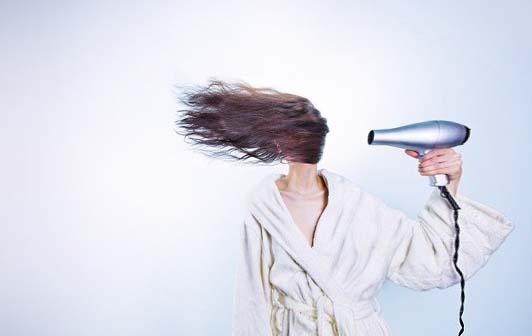
L’avis de l’Etude Française sur la Santé des Femmes, recommande de limiter l’utilisation d’appareils chauffants sur les cheveux.
Plusieurs raisons justifient ce conseil :
- Plus vous utilisez ces produits, plus vos cheveux sont exposés à la chaleur.
- Le risque d’allergies augmente lors de l’utilisation de la chaleur sur ses cheveux.
- La chaleur détériore la kératine naturelle de vos cheveux.
- Vous pouvez constater une rupture des fibres capillaires en raison de l’application de températures élevées pendant une longue période.
Conseils n°10 : Taies d’oreiller en soie
Les taies d’oreiller en soie sont faites de fibres naturelles. Ils sont conçus pour rendre vos cheveux plus brillants et plus doux. Les vêtements en soie ont le même effet sur la peau, la rendant plus douce et plus protégée.
Beaucoup de gens ne connaissent pas les avantages de la soie pour les cheveux, mais l’utilisation de ce matériau dans la chambre à coucher présente de nombreux avantages. Les taies d’oreiller en soie peuvent aider avec la tête de lit en raison de leur capacité à absorber l’humidité de vos cheveux, vous permettant de vous réveiller dans un état plus frais. Lorsque vous utilisez une taie d’oreiller en soie, vous remarquerez que vos cheveux sont moins crépus le matin car ils n’ont pas été abîmés par les frottements contre les matières en coton ou en polyester pendant le sommeil.
Conseils n°11 : Démêlez et brossez vos cheveux en douceur
Le brossage des cheveux a pour but non seulement d’éliminer les impuretés, la poussière et les cheveux morts, mais aussi de stimuler la circulation du cuir chevelu. Un geste délicat doit cependant être effectué sur des cheveux secs, car il risque de les abîmer et de les casser. On privilégie les brosses en poils naturels (sanglier…) ou les peignes à dents larges.
Le démêlage requiert lui aussi de la délicatesse. Il est dommage d’avoir des cheveux démêlés et abîmés ! En brossant/peignant légèrement vos cheveux avant de les laver, vous pouvez les pré-démêler. Pendant le conditionnement de vos cheveux, séparez vos mèches avec vos doigts en remontant, en commençant par les pointes. Les nœuds disparaîtront facilement si vous avez un peu de patience !